








How Cash Support Can Help Children Return to School

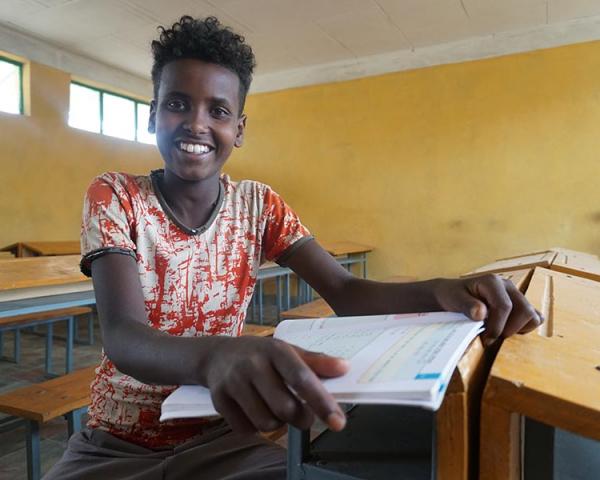
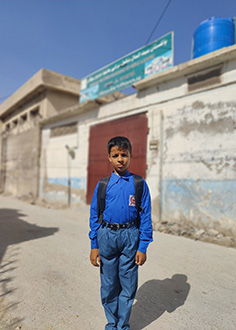
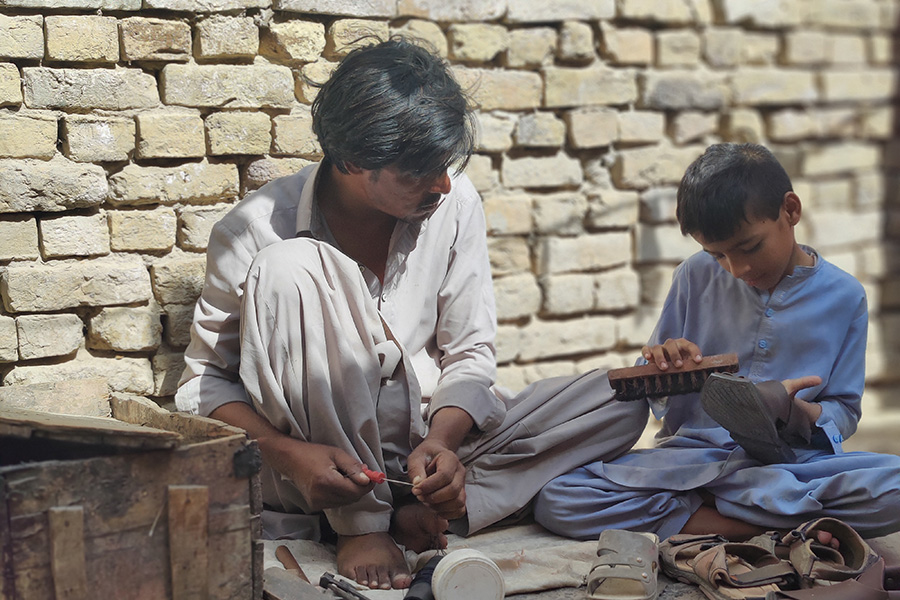
In a busy corner of Quetta, a 10-year-old Muzamil once spent his days repairing worn-out shoes for a few coins. He wanted to be in school like his peers, but his family could not afford the trade-off. Each hour in a classroom meant one less hour earning.
But his dream of being in a classroom, dressed in uniform, soon turned to reality with a steady financial cushion that allowed his family to think beyond the next meal. Within months, he was back in school, carrying books instead of tools, and beginning to imagine a different future. The “cushion” came from a conditional cash transfer scheme in his country.
Less access, more economics
Across Asia and the Pacific, the reasons children remain out of school are often less about access and more about economics. Schools exist, and there are several policies to support universal education, but somehow millions of children continue to be excluded from the system. Globally, more than 270 million children and youth remain out of school, and in Pakistan alone, over 23 million
This is especially true for low-income families, where we see a direct contest between education and survival. Even when tuition is free, schooling carries unending costs of uniforms, transport, supplies, among other expenditures. More significant is the income a child might otherwise contribute. Like in Muzammil’s case, in many households’ children help sustain daily needs through informal work or family businesses, and removing that contribution can upset a fragile balance.
This makes education a difficult calculation. In most cases, parents are aware of the benefits that educating their children can have, but often find themselves unable to prioritise these long-term goals in the face of pressing immediate needs. Day-to-day food, month-to-month rent, and healthcare inevitably come first.
This dilemma in households make it quite challenging to convince parents to send their wards to school. It is not surprising then that millions of children across the region are out of school, particularly in countries where poverty and inequality persist. Without addressing the financial pressures families face, expanding education systems alone is unlikely to bring the most vulnerable children back into classrooms.
Addressing poverty and schooling together
One solution that could address these challenges is the integration of social protection with education policies, and can be done through ‘conditional cash transfers.’ Instead of tackling the issues of poverty and schooling separately, this model could resolve them together. While the focus here is on easing financial strain, the byproduct could be families making different choices when it comes to their children’s education.
Through the system of conditional cash transfers, families receive regular financial support on the condition that they send their child to school. The amounts can be modest, but they can offset the costs of schooling and compensate for lost income.
In Pakistan, for instance, such social safety net programmes have begun aligning more closely with education goals. And that is how Muzammil got a shot at attending school again. Through the country’s Integrated Social Protection Development Programme (ISPDP), supported by the Asian Development Bank in partnership with the Education Above All Foundation, families like his are receiving targeted financial assistance tied to education outcomes. A modest but reliable cash stipend enabled the 10-year-old’s family to shift from survival mode to stability.
This shows that linking financial support to school attendance can create a practical incentive for families to send children back to school and keep them there. This is an intelligent approach to addressing lack of attendance and school drop-out rates as it does not expect families to act against their circumstances. It gives them options to change those circumstances just enough to make education possible.
More broadly, it reflects a shift in how development challenges are understood. Education outcomes are closely tied to household stability, and supporting one without the other often limits impact.
The Data Challenge
The approach, however, doesn’t come without its own complications. Identifying the right families requires reliable data, a big ask since this is not always available. And gaps in targeting can mean that some children at some point will also be left out. ISPDP is therefore also supporting improvements in data systems, financial management, and program delivery mechanisms within BISP to ensure better targeting and transparency in reaching the poorest households.
The other concern has been of sustaining these programmes over a long period of time. They depend on consistent funding and long-term commitment, and more often than not economic or political shifts can disrupt support, reducing their effectiveness.
There are also practical challenges when it comes to implementation on the ground. Monitoring school attendance and coordinating between education and social protection systems requires administrative capacity that is still developing in many contexts, and is harder to monitor.
Finally, financial incentives alone cannot solve everything. If schools are under-resourced or learning outcomes are poor, families may still opt-out after an initial bout of enthusiasm.
But there is hope, as analysis of similar models in other regions has shown encouraging results. In parts of Latin America and Southeast Asia, financial support tied to education has helped improve attendance and reduce dropout rates.
What can help?
One element that often receives less attention is the role of community. While financial support can open the door, it is local engagement that helps ensure children return and stay in school. Teachers, volunteers, and neighbours often play an important role in identifying children who have dropped out and encouraging families to reconsider their decisions.
Gender can also influence these decisions. In some of our projects, we have seen that girls are more likely to be kept out of school when resources are limited. We can address this with well-designed programmes that can provide incentives for equal access.
Technology is beginning to play a role as well. Digital payment systems can make it easier to deliver support efficiently, while better data systems can improve how programmes are designed and monitored. ISPDP is helping strengthen these systems by supporting digital payments, improving information management systems, and enhancing institutional capacity so that social protection programs can reach more beneficiaries efficiently and reliably.
In the end, if financial barriers to education remain unaddressed, the consequences will extend well beyond individual children and families. Entire communities and countries are at a risk of remaining locked in cycles of poverty and fewer opportunities for growth.
The choice between earning and learning should not exist, and removing that choice, even in small ways, can change the trajectory of a child’s life as well as their community’s.