








From Volunteer to Voice of Change

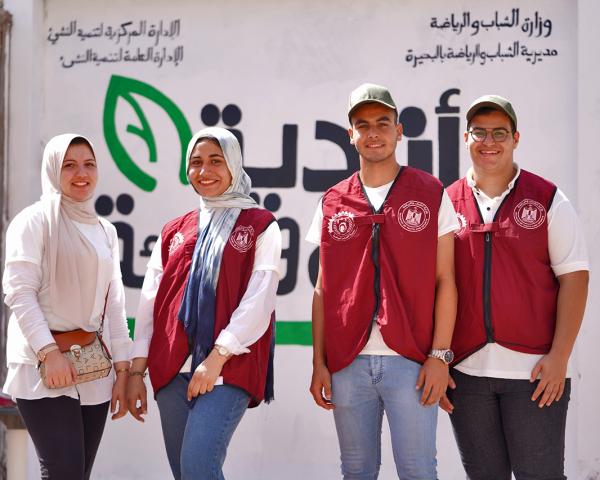
In the coastal city of Alexandria, change is not always driven from boardrooms or policies. Sometimes, it begins in schoolyards – with children planting trees, collecting waste, and learning that they have the power to shape their environment.
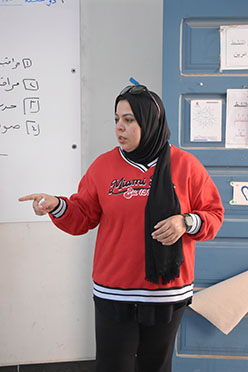
For Enas Younis, that’s where it all started.
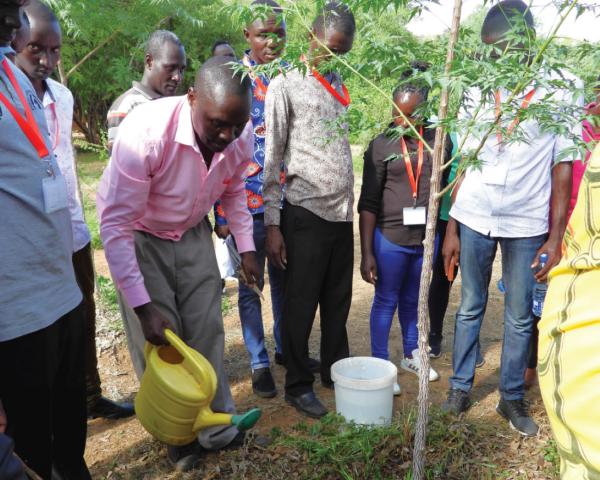
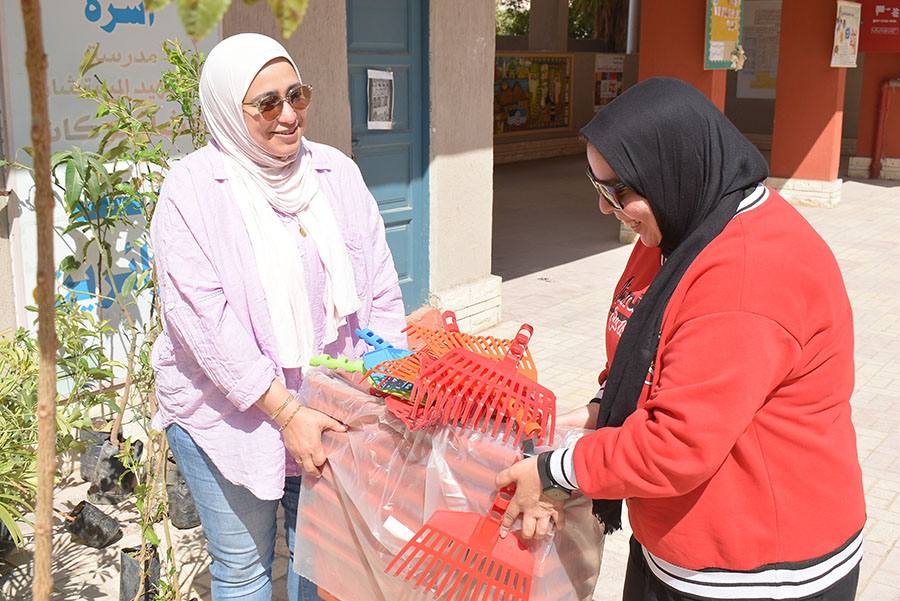
Since 2016, she has been moving from one public school to another, not as a teacher, but as a volunteer. Her days were spent outdoors, organizing activities for children: planting trees, collecting waste, and teaching them how to care for their environment. Sometimes, she worked with as many as 180 students at a time, dividing them into small groups, guiding them through each task, and turning ordinary moments into lessons in responsibility and pride.
“I like to work on the ground,” she says. “Leave me there and let me manage.”
Over time, her role grew. What started as simple volunteering became coordination across entire districts. From Montazah to Agami, Enas managed logistics, supported schools, and ensured activities ran smoothly. She became a trusted presence – someone schools could rely on.
But as she spent more time with students, she began to notice something troubling.
Outside, children were engaged, active, and full of energy. Inside the classroom, many of them were struggling.
Basic learning - especially in Arabic, science, and mathematics - was a challenge. Lessons often felt disconnected from their daily lives, and students were falling behind. Enas saw it clearly: the same children who could organize themselves to plant trees or clean their surroundings were losing confidence when it came to learning.
She wanted to do more.
That opportunity came when she learned about the Mustakbaly programme, implemented by UNICEF Egypt in partnership with Education Above All (EAA) Foundation’s ROTA programme, and supported by the Qatar Fund for Development. Curious and determined, she applied and was selected to take part in a Training of Trainers in Cairo. It was a turning point.
For the first time, Enas stepped into a new role – not just working with children but supporting the teachers who guide them every day. The training gave her tools, methods, and a new way of thinking about education. It also gave her something more: a sense of purpose.
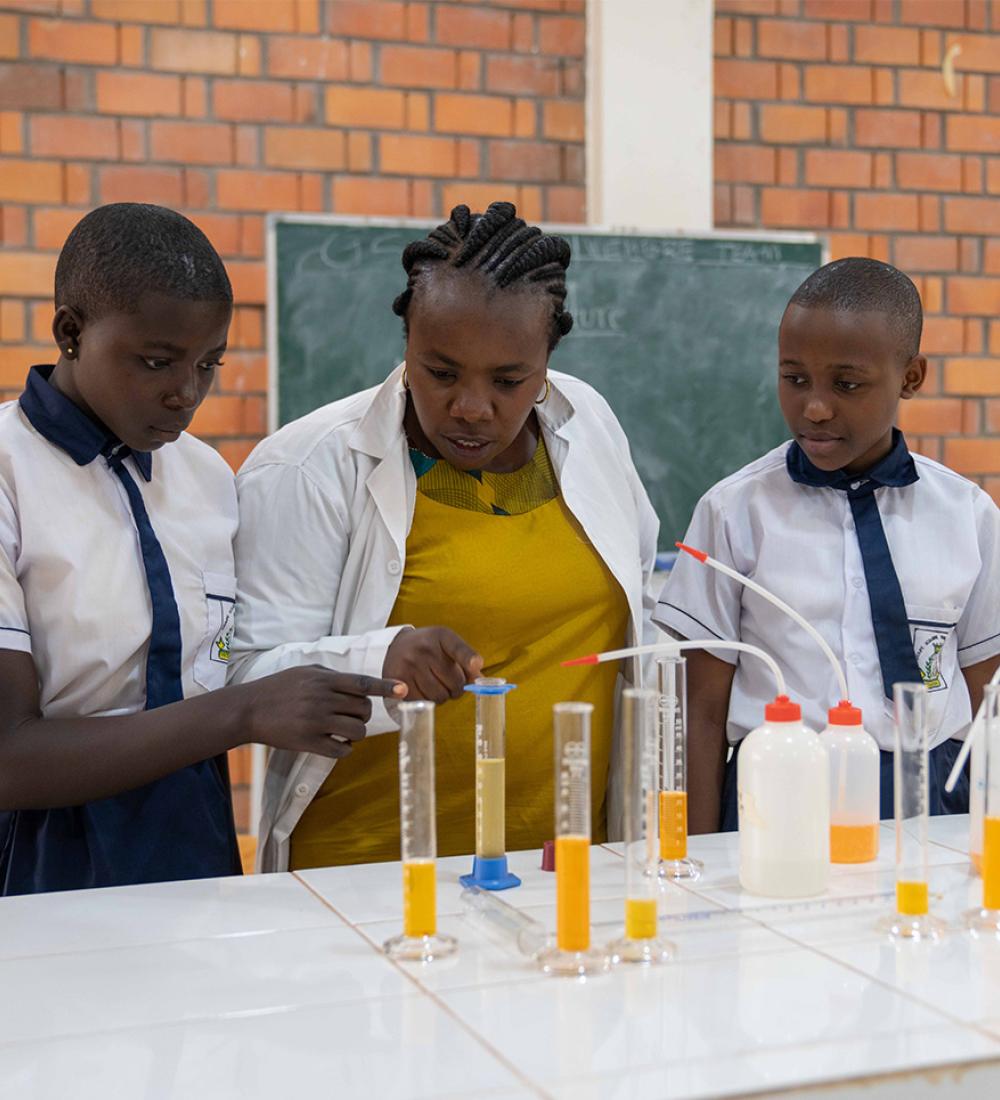
Today, Enas works closely with science and mathematics teachers, particularly in vocational and underserved public schools. She helps them strengthen foundational learning and connect lessons to real-life issues, including climate and the environment – topics she has long been passionate about.
Her approach is simple and grounded in her experience: learning should be practical, engaging, and shared.
“She made people feel comfortable,” a colleague recalls. “It didn’t feel like training. It felt like we were learning together.”
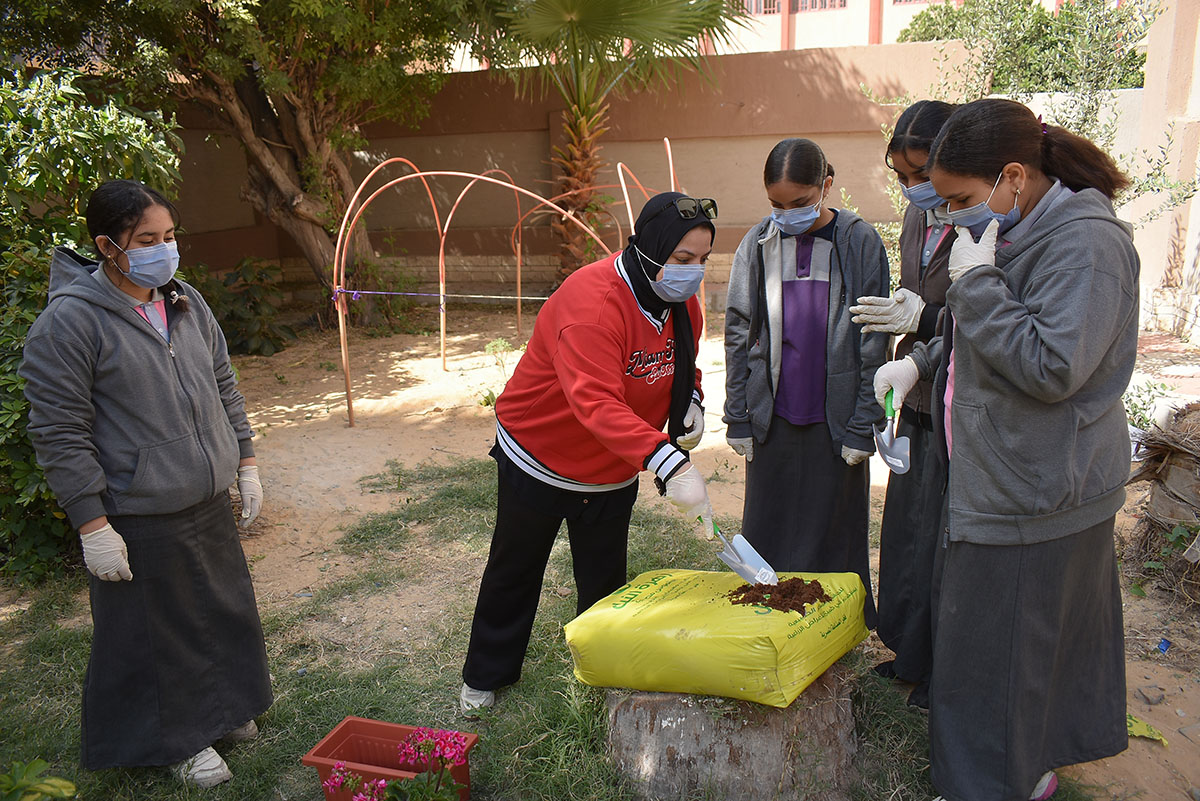
Enas has not left the ground behind. She still visits classrooms regularly, observing lessons, speaking with teachers, and following up to see how new methods are being used. For her, the real measure of success is not the training itself, but what happens afterward.
“You go and see them in action,” she says. “That’s when you know something has changed.”
Her journey, from organizing children in schoolyards to empowering teachers across multiple schools, is not just a story of personal growth. It is a story of connection. Between communities and classrooms. Between teaching and real life. Between opportunity and potential.
And it is a reminder that meaningful change often starts quietly – with someone willing to show up, stay close, and keep going.
The Green Visions and Thriving Futures project of Education Above All (EAA) Foundation supported by Qatar Fund for Development, in partnership with UNICEF’s Generation Unlimited will support 370,000 young people across Jordan, Lebanon, and Egypt in greening actions to protect biodiversity, manage waste and conserve water in local communities, with 60,000 of them undergoing a climate action curriculum in preparatory schools. In addition, the programme will support 195,670 youth in Egypt to transition from learning to earning through job placements or self-employment in sectors such as information technology, healthcare, engineering, and agriculture. This includes 22,500 young people who will first learn about climate action through the curriculum, then gain hands-on experience by participating in greening initiatives, and then access job opportunities.