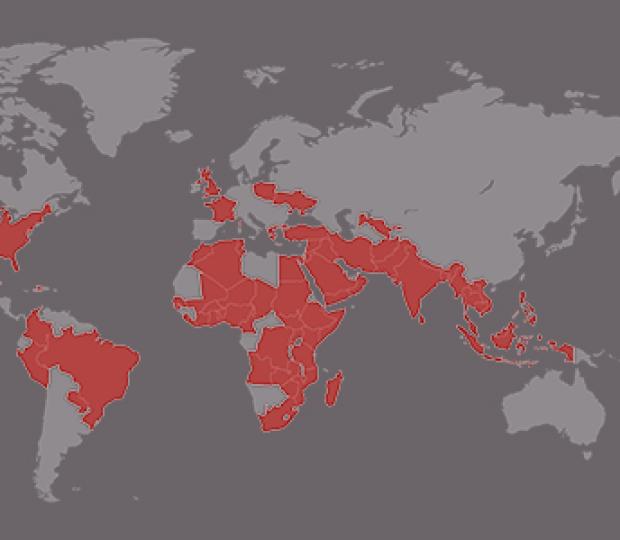
Disclaimer: This map is provided to facilitate the general location of the EAA supported projects. EAA does not have an official position regarding boundaries of or
disputed boundaries between countries.
World Children’s Day: Getting Children into School Is Only the Beginning
By Noof Al Jefairi, Senior Engagement Officer, Education Above All Foundation’s Educate A Child programme and
Ikram Sellami, Education Officer, Education Above All Foundation’s Educate A Child programme
For out of school children (OOSC) who gain access to education through a development project, what happens when that project ends? The answer depends, in part, on whether the systems and approaches that supported their enrolment can be sustained.
As the world marks World Children’s Day on 20 November, this question deserves attention. Getting a child into school is one part of the equation, but what also matters is whether that child can continue learning after the project that opened the classroom door has closed. For millions of children who face barriers to education, sustainable access depends on whether education systems are equipped to support them over the long term.
While enrolment and retention figures are absolutely important measures of achievement, these figures alone do not fully capture the impact and durability of systemic change. Lasting progress depends on governments, development partners and communities working together to ensure that successful interventions become embedded in the education system. In education, this means ensuring that successful interventions contribute to stronger systems that continue to serve children long after projects have ended.
Policy influence offers an important indication of whether successful project approaches advance wider education reform. When a successful approach is formally adopted by a government, it can establish a commitment to addressing exclusion, assign responsibility to relevant institutions, and provide a basis for expansion and sustainability. In this way, project achievements can become part of the policies and practices that guide systems after the initial intervention. Policy adoption can therefore provide a critical marker of progress towards systemic change.
For policy influence to engender lasting change, effective project approaches need to be taken up by government institutions and translated into practice. This requires institutional capacity, continued political commitment and adequate resources for implementation. Without these, even well-designed interventions risk ending when project funding runs out.
The ASEAN Declaration on Strengthening Education Systems for Out-of-School Children and Youth provides a compelling example of how efforts to address educational exclusion translate into regional policy commitments. It established a shared commitment among member states to strengthen education systems and improve learning opportunities for OOSC and young people.
At the country level, experiences from Cambodia, Kenya and Paraguay demonstrate how initiatives to improve access to education can contribute to wider policy changes and help build systems that continue supporting marginalised children. In Cambodia, work to improve education access for OOSC contributed to 26 recommendations that influenced national policy frameworks, education standards and implementation practices relating to inclusive education, remedial learning and school improvement. The recommendations helped bring the needs of children excluded from education into national education policy discussions.
In Kenya, the EAA Foundation-Girl Child Network partnership combined advocacy, teacher training, and capacity building to advance policy and action on child protection and inclusion. The project worked with communities, parents, and schools to promote education access, while supporting policy dialogue between the Ministry of Education, disability organisations, and some of the country’s most marginalised children. This approach contributed to the elaboration of Kenya’s Sector Policy for Learners and Trainees with Disabilities, which was launched by former President Uhuru Kenyatta in 2018. The policy established inclusion as a guiding principle within the education sector, setting standards for infrastructure, teacher training, assistive technologies, and reasonable accommodations. Its subsequent influence on legislative activities, including the Learners with Disabilities Bill 2023, indicates the potential for project-related policy development to shape a broader national framework for disability inclusion.
In Paraguay, a partnership with UNICEF developed and institutionalised Learning Recovery Spaces (ERA), an innovative pedagogical model designed to address learning gaps and support the retention of newly enrolled students. Following advocacy and technical support, the Ministerial Resolution “General and Specific Provisions of the ERA Strategy” was adopted to enable the implementation of ERA in targeted schools. This resolution removed age-related barriers to enrolment, representing a milestone in ensuring national sustainability.
Together, these experiences demonstrate how sustained engagement with government institutions can contribute to durable changes in education policy and practice. The challenge is to turn commitment into action, so that every child realises her right to education. Rather than waiting until a project ends to consider what comes next, governments and development partners should plan for lasting impact on day one.
This means looking beyond what a project may achieve during its life cycle to consider what the partnership enables the education system to do in the future. Sustainability requires early government ownership and involvement in determining how effective approaches become integrated into national education planning, financing and institutional support. It also requires measuring success not only by the number of children enrolled during a project, but whether education systems continue to support them years later.
This World Children’s Day, the focus should be on more than getting children into classrooms. It should also be on ensuring that they are not left behind when a project ends. Every child deserves an education system that will support their right to learn, regardless of whether an individual project is still running. The question governments and development partners should ask is simple: What will the education system be better able to do for excluded children because this partnership existed?
Noof Al-Jefairi
Noof Al-Jefairi is a Senior Engagement Officer at Education Above All Foundation, with five years of experience in international partnerships, stakeholder engagement and education development. Her work spans government and multilateral relations, international cooperation, strategic communications and advocacy. She holds a degree in International Politics from Georgetown University (2020).
Ikram Sellami
Ikram Sellami is an Education Officer at the Education Above All Foundation’s Educate A Child programme. Her work contributes to global efforts to reach children who remain excluded from primary education, supporting initiatives that expand access, address educational barriers, and create opportunities for children to realise their right to learn.
"Humanity will not overcome the immense challenges we face unless we ensure that children get the quality education that equips them to play their part in the modern world." -- HH Sheikha Moza bint Nasser












 September 28, 2026


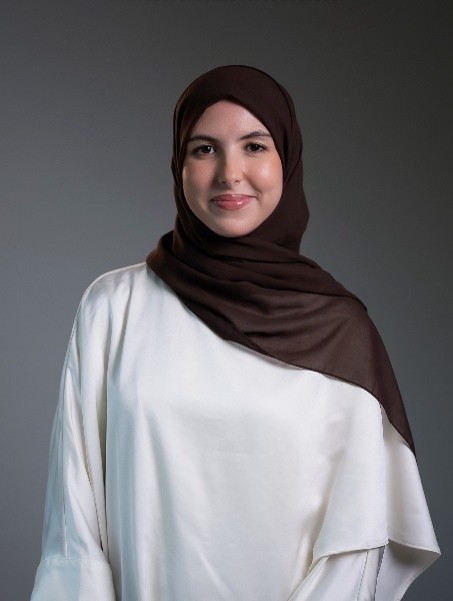 Ikram Sellami is an Education Officer at the Education Above All Foundation’s Educate A Child programme. Her work contributes to global efforts to reach children who remain excluded from primary education, supporting initiatives that expand access, address educational barriers, and create opportunities for children to realise their right to learn.