








Three Conversations, One Question: What Does Climate Action Mean for Young People?

Reflections on EAA Foundation’s COP31 experience, from protecting livelihoods to making youth voices count.
What does a climate conference have to do with a young trader trying to keep her business open, a farmer facing another drought, or a school leaver looking for work?
For Education Above All Foundation, those connections were at the heart of our participation at COP31 in Antalya.
We explored climate resilience from different angles: protecting livelihoods in fragile settings, keeping local markets working through a shock, and turning young people’s voices into action. The question connecting them was straightforward: what would make a difference in a young person’s life?
Different Perspectives, Shared Concerns
One of the things I valued most was bringing together people who approach these challenges from very different starting points. Education, employment, industry, development finance and youth advocacy each offer part of the answer. Putting them in conversation helps reveal what any one sector might miss.
That breadth was reflected in this year’s COP31’s programme, which connected finance and trade with education, skills, technology and livelihoods. For EAA Foundation, it was an opportunity to show why the journey from learning to earning belongs in the climate conversation.
But the contributions that stay with you are often the ones that make the issue personal.
Timothy Sitanya, a young Zambian climate entrepreneur and UNICEF youth leader, opened our session by sharing his country’s experience of drought. His message brought us back to the people behind the discussion:
“When we talk about the missing middle, let’s make sure we don’t miss the young people themselves.”
That thought connected all three conversations.
First: Protect What Young People are Building
At “From Risk to Resilience,” organised by Oxfam and the Union for the Mediterranean, my colleague Sara Keshaish brought EAA Foundation’s perspective on livelihoods in fragile and conflict-affected settings.
Her question captured the stakes: how do we protect the livelihoods young people are working so hard to build?
An example from our agriculture work helped make the answer tangible. Farmers received seeds, tools and training, while community members earned an income restoring the irrigation canals those farmers depend on. The work supported incomes immediately and helped strengthen the community’s ability to withstand future shocks.
It is a useful way to think about resilience. A restored canal means water can reach a farm. That farm can keep producing. Other people can keep earning.
Sara also emphasised that communities should help identify what gets funded. They know which systems they depend on, where the weaknesses are and what needs attention before disaster strikes.
If you were deciding where to invest, would you start by asking a community what breaks first?
Then: Follow the Chain
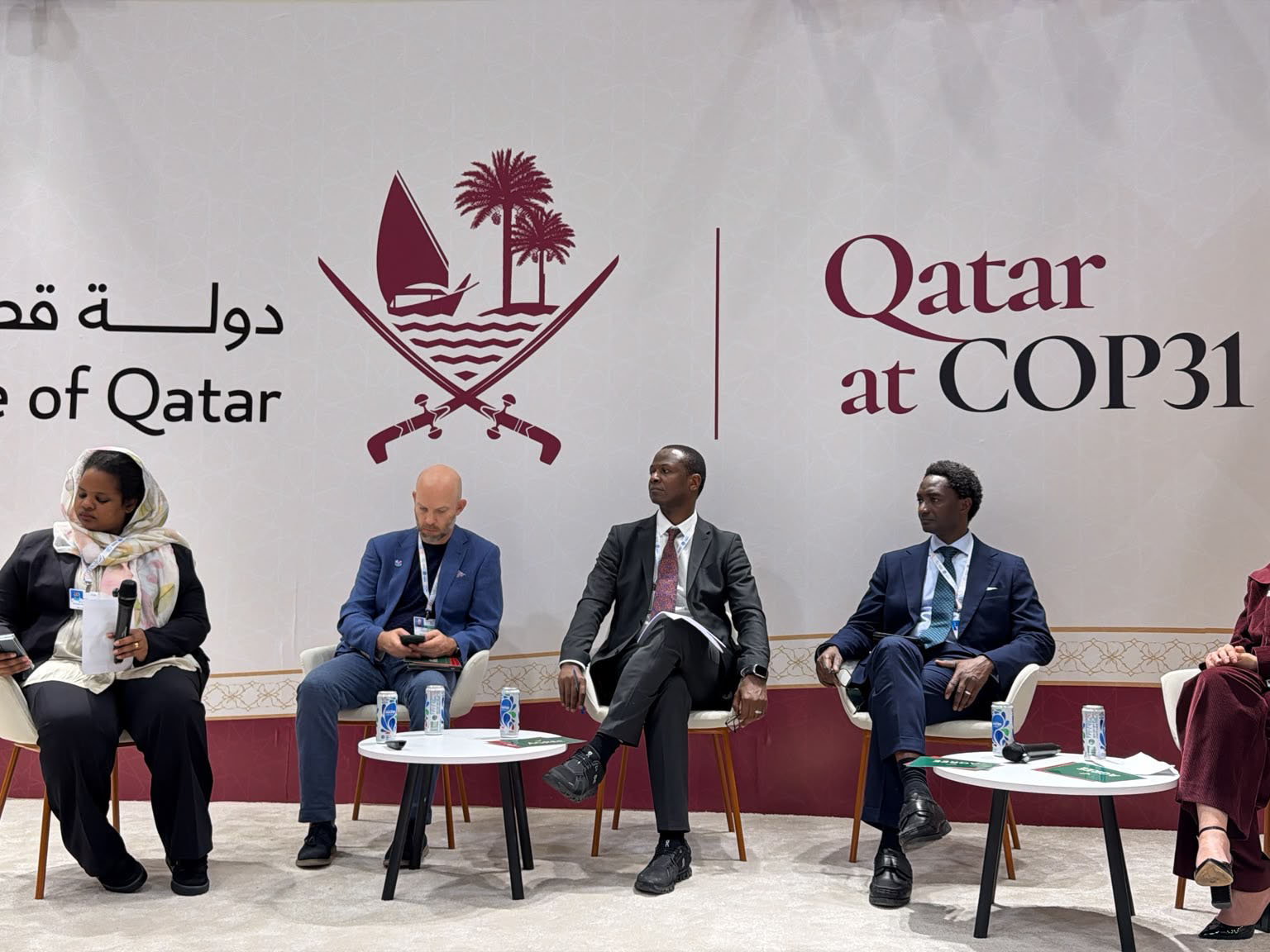
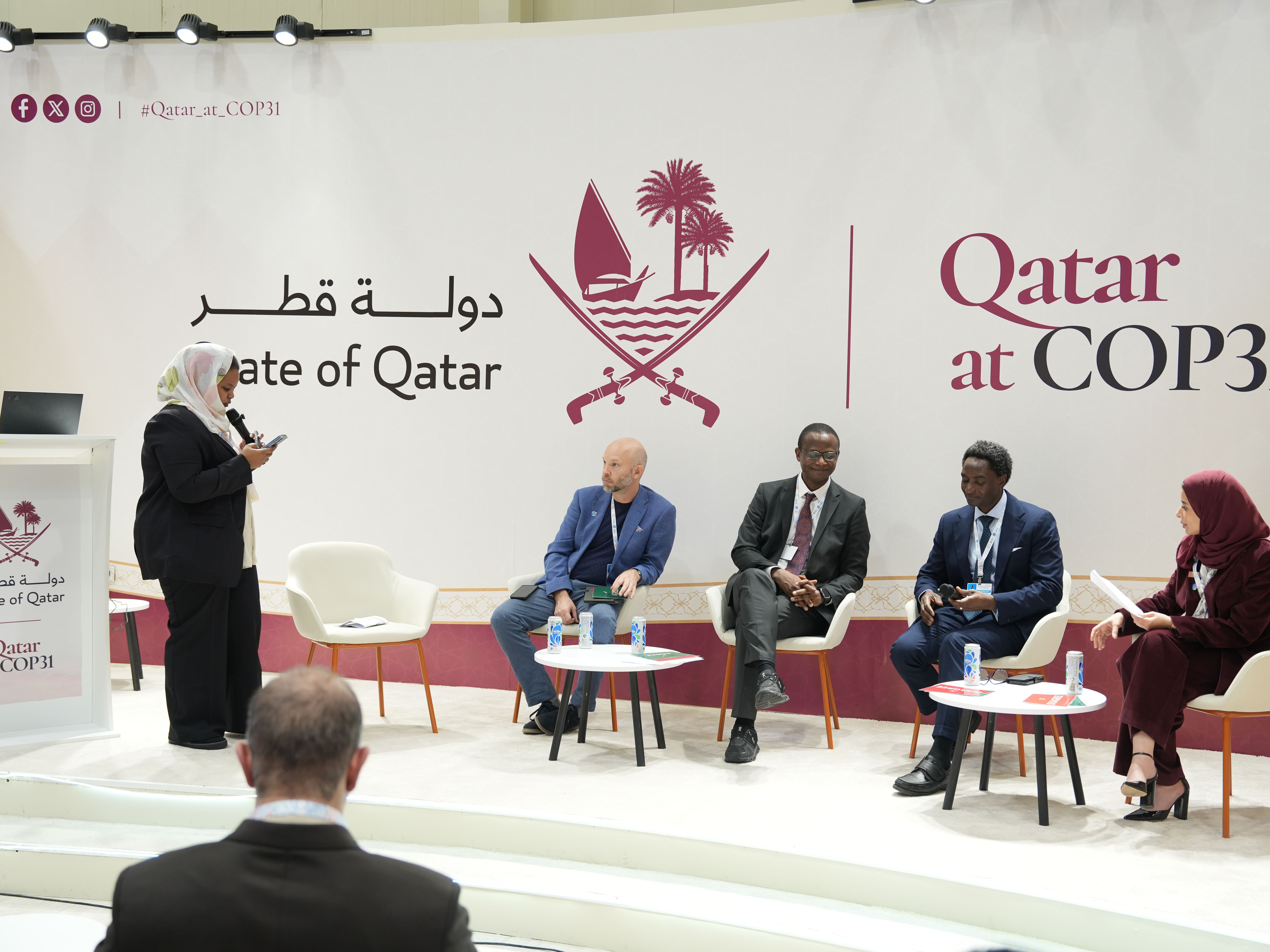
At EAA Foundation’s “The Missing Middle of Climate Action” session on the Qatar Pavilion main stage, we took that question into the market.
With the ILO, UNIDO, the Islamic Development Bank and Qatar’s Ministry of Sports and Youth, and with Nisreen Elsaim moderating, we put a value chain on screen, from farm to market. Then we introduced a climate shock and broke it one link at a time.
The format asked speakers to take a position. Does immediate cash matter more than training? Can green technology wait? Are banks right to hesitate?
Try answering those questions as a young trader whose customers have disappeared.
Cash can help you get through the first weeks. But to rebuild, you may also need a buyer, working capital or a new skill linked to demand. Those needs belong within the same recovery.
Or think about a solar pump. It can keep a farm running when fuel is unavailable. It can also create work for someone who knows how to install and repair it. But that opportunity depends on practical skills, paying customers and support that lasts beyond the project.
The lending discussion raised another question: who carries the risk? Through partial credit guarantees, EAA Foundation shares part of that risk with local banks and microfinance institutions, helping them lend to young people they might otherwise be unable to support.
What struck me was how quickly institutions with different mandates agreed that this middle matters. The debate was about how to support it, and what needs to arrive first.
One clear point of agreement was to prepare before the shock, with finance, partners and response plans already in place.
Finally: Who Gets to Shape the Answer?
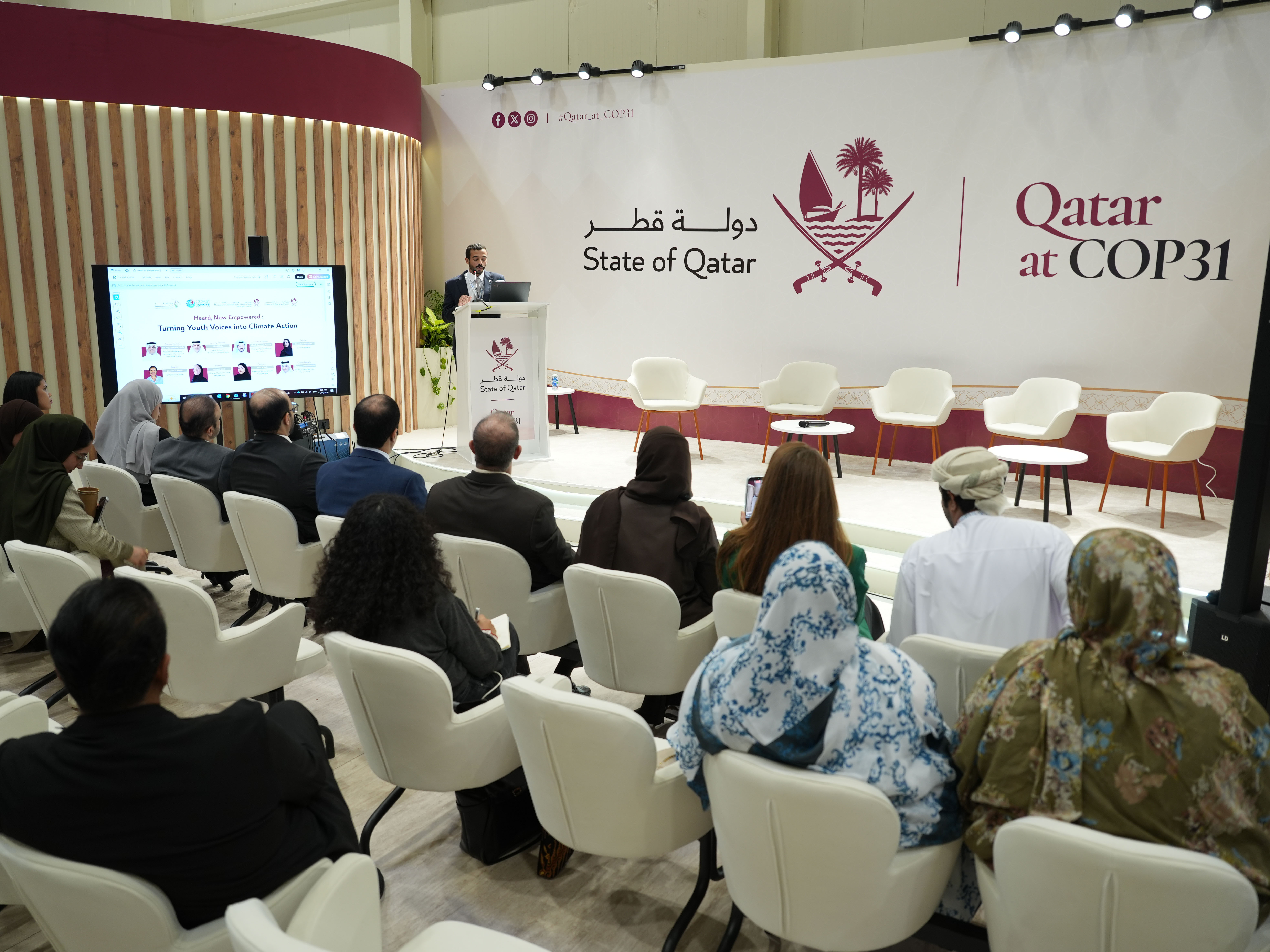
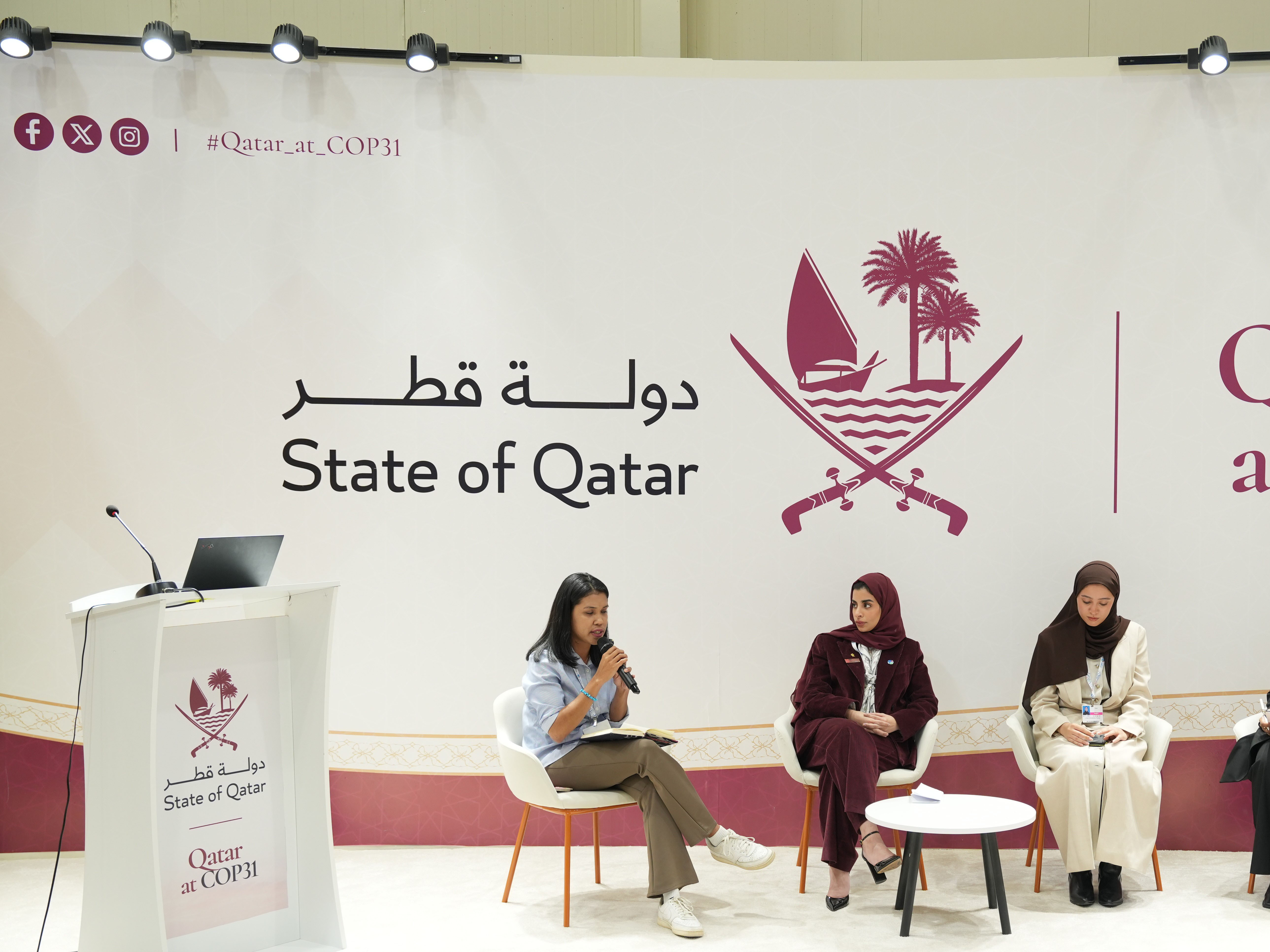
Later, at the Ministry of Sports and Youth’s “Heard, Now Empowered: Turning Youth Voices into Climate Action,” moderated by Maha Al Bader, the discussion turned to participation.
It prompted a harder question: whose voices are still missing?
Many of the young people EAA Foundation works to reach are out of school, displaced, living through conflict or working informally to support their families. Attending an international conference may be impossible. Even joining online can depend on connectivity, time and resources they do not have.
Their absence matters because their experience could change the decisions being made.
Our local partners help us reach young people whom events like COP31 can miss. But reaching someone is not the same as hearing them. Their views need to influence which skills we support, which barriers we address and how we judge whether a programme works.
The same applies to green skills. There is no single course that fits every country or sector. An opportunity becomes real when a young person can use a skill, get paid for it and keep earning from it.
What comes home with us?
Across the three sessions, the practical messages connected: listen to communities, prepare earlier, link skills to real work, and make finance accessible.
For me, the value of COP31 lies in what we do with those connections afterwards. Can we bring young people into programme design earlier? Can we plan support around the businesses and services that communities already rely on? Can we connect immediate relief to a route back to earning?
Those are questions we can take into our everyday work.
And there is one test I would keep coming back to:
When the next shock hits, can a young person keep earning, or recover without starting from zero?
That is an outcome worth taking home from Antalya.