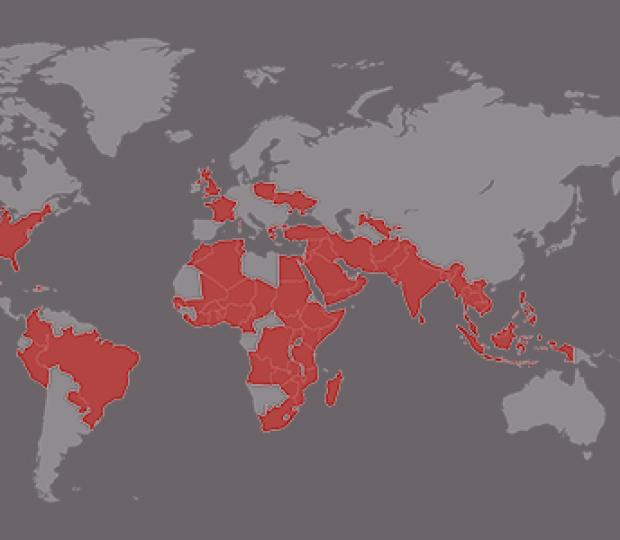
Disclaimer: This map is provided to facilitate the general location of the EAA supported projects. EAA does not have an official position regarding boundaries of or
disputed boundaries between countries.
More Than Learning: The Protective Power of Education in Colombia
By Nicole Suarez
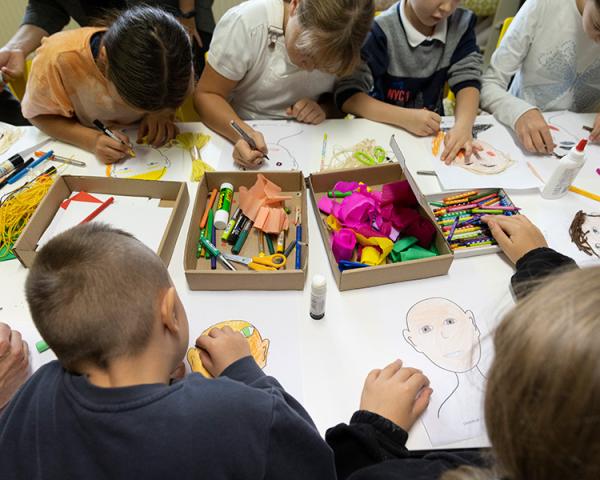
For 12-year-old Hugo*, school is more than a place where he learns Maths. It is where he can express himself, spend time with friends and have fun. He has learned to be respectful, responsible and supportive. Hugo says school has helped him mentally and strengthened his relationships, while playing football has taught him how to be part of a team.
He’s from a neighbourhood in Cartagena where, as he describes it, “life can be quiet and dangerous, but people still live together in a good way.” The city, famous for coastal vistas and bustling shopping districts, is also home to various gangs that compete violently for territory.
Despite the challenges, Hugo is focused on the future. He wants to become a doctor, so he can help others.
Hugo’s experience shows how education can shape a child’s life beyond academic learning. School is helping him develop confidence, a sense of purpose and aspirations for the future, while giving him opportunities to connect with others, learn and grow.
In communities affected by conflict, displacement or violence, continued access to quality education provides a platform to develop the knowledge and skills to build for the future. It can also provide structure, healthy relationships with teachers and peers, psycho-social support, a warm meal, and access to other essential services. Together with appropriate safeguarding and child-protection measures, education can reduce a child’s exposure to violence, exploitation, child labour, trafficking and other forms of harm.
This is clear in Colombia, where decades of armed conflict have adversely impacted children, families and communities. Schools and teachers have been targeted and children forced into gangs and armed groups. In 2024-25, the Global Coalition to Protect Education from Attack reported at least 160 cases of attacks on schools in the country, and at least 129 attacks on school students, teachers and other education personnel.1 Colombia ranked among the countries with the highest incidence of attacks on education during this period.
These figures highlight a jarring tension: though education can play an important protective role in children’s lives, education itself requires protection from attack.
Moreover, these data are particularly poignant when one considers the theme associated with this year’s International Day to Protect Education from Attack: “Can education survive attack? The resilience of human communities.” For children like Hugo and the communities from which they come; the answer is self-evident. So, grappling with what enables education to continue in the face of crisis is perhaps most salient. Education’s survival depends not only on protecting schools, students and teachers, but on strengthening the systems and communities that sustain learning when formal structures are disrupted. Colombia’s case shows the urgency of the matter and the vital role that communities play in keeping education accessible.
On one hand Said Yasin, Executive Director at Education Above All (EAA) Foundation’s Educate A Child programme, explains the consequences exceed immediate violence. “When schools are attacked, occupied or forced to close, the harm extends far beyond the classroom. Children lose access to learning, stability and protection, while teachers may be threatened or displaced. In Colombia, attacks on education have also exposed children to recruitment and other protection risks, including while at school or travelling to school.”
On the other, Maleiha Malik, Executive Director of EAA Foundation’s Protect Education in Insecurity and Conflict (PEIC) programme, points out that protecting education requires the prioritisation of children’s immediate safety and their prospects for the future. “In Colombia, protecting education means more than protecting a school building. A safe space to learn and play protects children from recruitment into armed groups and violence. A quality, inclusive education for children in Colombia preserves hope and opportunity and helps communities build the foundations for lasting peace.”
Protecting education therefore cannot stop at simply preventing attacks. It requires that children can continue to access safe, quality education when daily life is upended. It means more than keeping schools open. Protection means finding safe and appropriate ways for children to continue learning and remain connected to relationships, services and support, even when their circumstances change.
Making this possible requires systems that are flexible and able to anticipate and respond to disruption. Contingency planning, early-warning and risk-monitoring mechanisms and community-based approaches help sustain access when education is interrupted. Strong referral pathways can also link children and families to social protection, health and psycho-social support as necessary.
Resilience is Also Built Within Communities
Often, when formal systems buckle under the weight of attacks, it is the students, teachers, families and community who find practical ways to keep education going. They may know which routes children can best take to school, when safety is no longer a given, which children have stopped attending and which families are in need of additional support. Recognising this knowledge and reinforcing local capacity should be part of any formal approach to community outreach and engagement.
Hugo, who is enrolled through EAA Foundation’s joint project with Fundación Pies Descalzos, reminds us why protection and access are fundamental. Education has given him space to grow, to consider different perspectives and learn how to work with others. It has given him the confidence to think about the person he wants to be one day. His aspiration to become a doctor is a clear reflection of education’s protective and transformative power.
Whilst his story is his own, at scale it represents what is at stake for millions of children growing up amid conflict, displacement and violence around the world. His growth and ambition show that behind the jarring statistics are individual children with abilities, nuance and aspirations. Protecting their access to education helps ensure those aspirations are not lost to turmoil.
Education must therefore be understood not only as a right, but as a critical component of the broader protective environment around children. And it should in no way be treated separately from protection. We must keep children in education, so they have the tools to imagine and build a future after crisis.
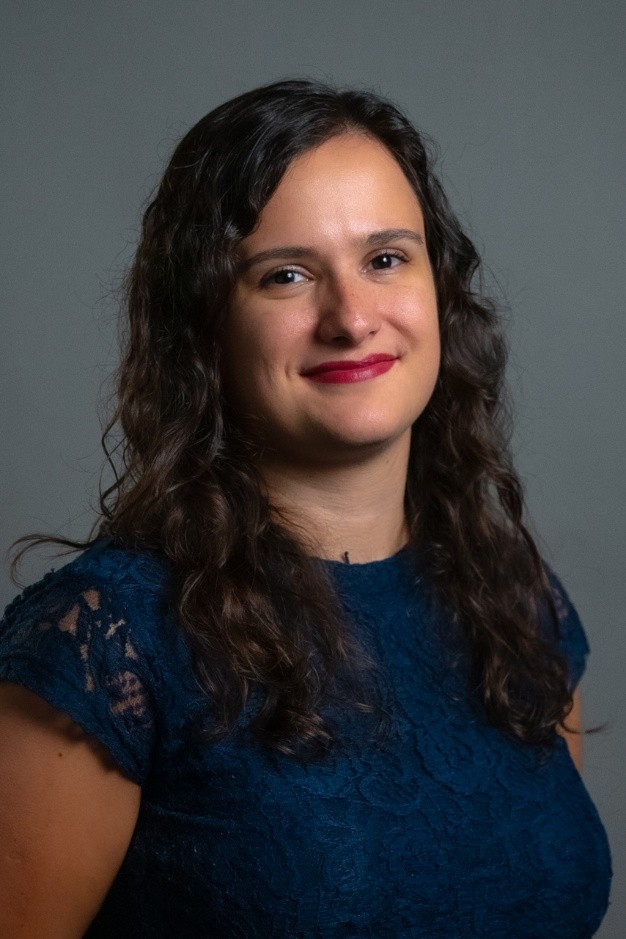
Nicole Suarez is an education officer with the Educate a Child (EAC) programme at the Education Above All Foundation. Holding a Master of Science in Violence, Conflict and Development, she currently contributes to initiatives that promote educational equity and access, while helping to create inclusive learning environments.
"Humanity will not overcome the immense challenges we face unless we ensure that children get the quality education that equips them to play their part in the modern world." -- HH Sheikha Moza bint Nasser












 September 28, 2026