








Doubling Down on the Human Right to Education – Even When it’s Hard

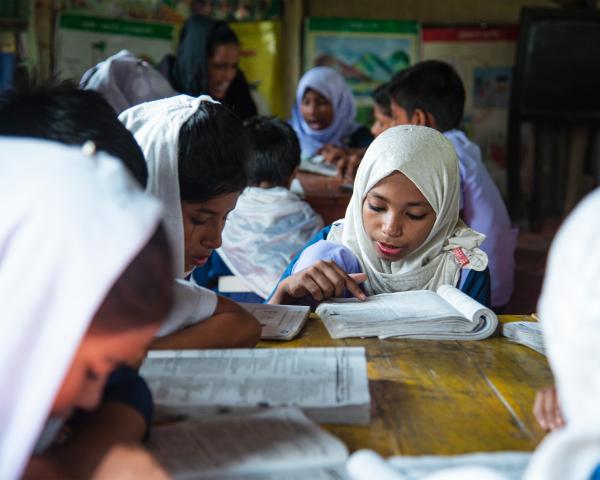
Education is a fundamental human right. Full stop. It is the cornerstone upon which people everywhere, regardless of gender, race, origin, or circumstance build the freedom to pursue opportunity and realise the full range of their potential. To that end, the right to education is unequivocal. It applies to all children, including those in the hardest-to-reach, most unstable and conflict-affected corners of the world.
Cognizant of humanity’s potential and fragility in the wake of World War II, the United Nations sought to enshrine into our collective consciousness, “the inalienable rights that everyone is entitled to as a human being” vis-à-vis the first Human Rights Day as far back as 10 December 1948. And it has marked the occasion every year since.
However, this year, the theme “Human Rights, Our Everyday Essentials,” because “this period of turbulence and unpredictability, where many feel a growing sense of insecurity, disaffection and alienation,” strikes a much more resonant chord for those in the struggle against education exclusion. This is especially the case when one considers the troubling headlines coming out of northwestern Nigeria recently.
At this point, and for those who follow the developments on the ground, there is not a great need to recount the unsettling particulars of the incident in Niger state. In the early morning hours of 21 November, armed bandits stormed a Catholic school in Papiri and abducted approximately 315 people, the vast majority of whom were young students simply trying to get an education. The abduction was the second mass kidnapping at a school within the space of a week in Nigeria and as the number of missing children was revised upwards in the aftermath, we learned that this cowardly deed exceeded the attack on education in Chibok in 2016. Against the backdrop of the depravity, the extent to which kidnapping for ransom has become a viable economic proposition for brigands and extremist groups became self-evident as well. And the hits to education don’t stop landing. Still more Nigerian children of school-going age will be negatively impacted, as government authorities shuttered about 50 schools in the region as a security precaution. Fortunately, in recent days as many as 50 of the abducted pupils in Papiri escaped captivity on their own and the government secured the release of an additional 100 schoolchildren.
But, now, perhaps more than ever in light of this Human Rights Day, stakeholders in education ought to double down and take positive action to “reaffirm the values of human rights and show that they remain a winning proposition for humanity.” It is precisely at the moments that are most taxing and uncertain, that we cannot afford to yield, in spite of the disregard (or even disdain) some may show towards every child’s human right to education. With its partners, Education Above All Foundation (EAA) is standing in the gap to protect access, quality, and most importantly, opportunity.
“It is important for education organisations to speak out against attacks on education institutions and personnel, like what we have just seen in Nigeria and are seeing in Sudan. Education is the birthright of every child, regardless of the circumstance,” asserts David Mumo, Senior Education Specialist with EAA Foundation.
“Being on the side of human rights and the most vulnerable, our voices can be powerful in influencing those perpetrating conflict to respect education and in expanding access and protection for all children in these times,” he continues.
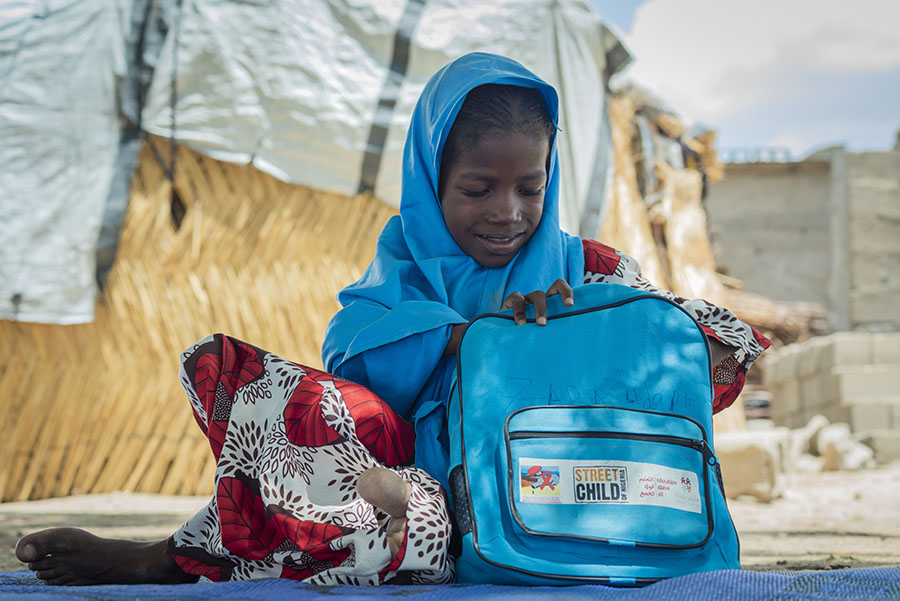
In that vein, EAA Foundation has been working in partnership with Street Child in some of the most difficult places in Nigeria for children to realise their rights. Since 2022, the joint, “Education for Every Child Today (EFECT)” project has not shied away, amid conflict spirals in the states of Adamawa, Borno, and Yobe, from training hundreds of teachers, building 54 schools, and enrolling more than 34,000 children into quality primary education.
But, it has not been easy. The security challenges facing communities and young learners where EFECT is active are not otherworldly, though they are significant. A great many project locations are, in fact, in IDP settlements and a variety of measures are taken to keep attacks on education at bay, as much as feasibly possible. Close coordination with government entities responsible for community mapping, collaboration with local partners, flexible-learning schedules adapted to evolving security situations, and community-based teachers are just a small part of the strategies utilised to protect access to education.
In that respect, Alhassan Jusu, EFECT Project Manager, Street Child Nigeria maintains, “we must prioritise education, particularly in times of conflict. The recent spike in kidnappings in Nigeria’s northwest is a stark reminder that children are being targeted and their fundamental rights violated. Children are not targets and must be protected from recruitment and armed conflict.”
Moreover, and on Human Rights Day, Jusu calls on education stakeholders “to work together to ensure that even in the most difficult circumstances, children’s right to education is protected and upheld. This means investing in security measures, supporting community-based solutions, and refusing to allow fear and violence to deny children their futures.”
Derek Langford
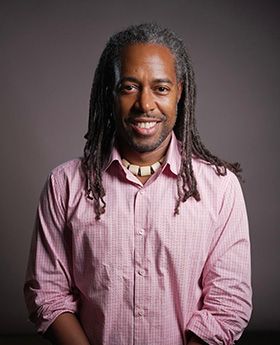 Derek J. Langford joined the Education Above All Foundation (EAA) in 2016 and works as the Senior Engagement Specialist for the Educate A Child programme. Before EAA, he worked in youth development, teacher training, conflict resolution and project management in Africa, Asia, and the United States. Mr. Langford is originally from Rochester, NY and holds a Master’s Degree in International Politics from American University. He is an avid book reader, enjoys learning new languages and spending time with his wife and children.
Alhassan Jusu
 Alhassan Jusu has over 14 years of experience in humanitarian, recovery, and development contexts, leading and coordinating complex programs across Education, Health, Livelihood, and Governance sectors. He is a results-oriented and adaptable leader with a proven ability to motivate and support diverse teams to deliver innovative interventions in resource-constrained and challenging environments. Over the years, he has developed and operationalised program strategies, spearheaded resource mobilisation, and designed high-quality proposals focused on value for money and measurable impact. His work emphasises accountability, learning, and contextual relevance, embedding participation and local ownership into program cycles while strengthening team capacity, fostering innovation, and driving synergy across functions. Recognised for his professionalism in coordination mechanisms, Alhassan effectively engages with donors, governments, and non-governmental stakeholders to promote collaboration and advocate for the rights of affected populations.